

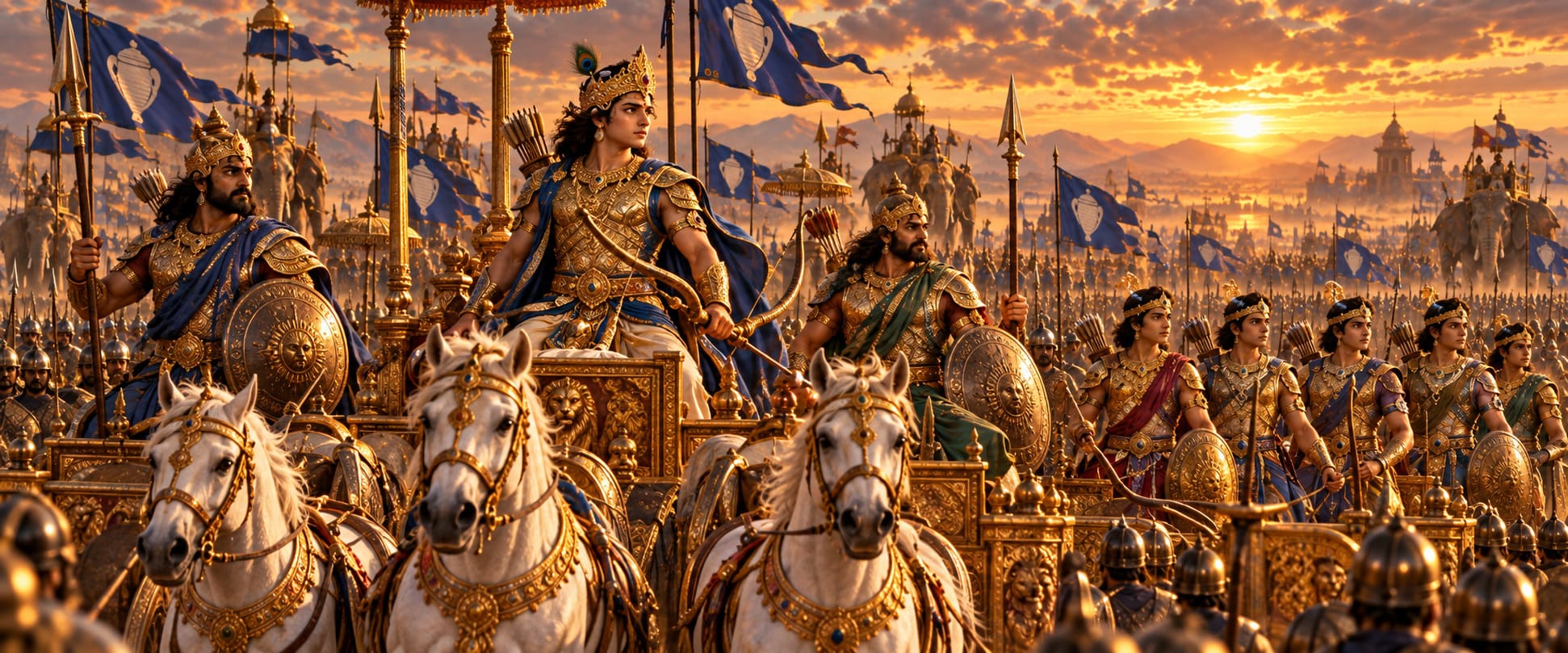
The Yoga of Arjuna’s Despair
ISKCON Title: Observing the Armies on the Battlefield of Kurukṣetra
Divine Form: Shri Parthasarathy – Chennai
The divine form connected with each chapter is my personal devotional interpretation for Verse to Vision. It is not an official classification of the Bhagavad-gītā or ISKCON.
Verse 6
Sanskrit
युधामन्युश्च विक्रान्त उत्तमौजाश्च वीर्यवान् ।
सौभद्रो द्रौपदेयाश्च सर्व एव महारथाः ॥ ६ ॥
Transliteration
yudhāmanyuś ca vikrānta
uttamaujāś ca vīryavān
saubhadro draupadeyāś ca
sarva eva mahā-rathāḥ
English Translation
Duryodhana said:
“There are the mighty Yudhāmanyu, the very powerful Uttamaujā, the son of Subhadrā and the sons of Draupadī. All these warriors are great chariot fighters.”
—Śrīla Prabhupāda, Bhagavad-gītā As It Is, 1.6
Wisdom Within the Verse
Duryodhana continues to name the powerful warriors in the Pāṇḍava army. Among them are experienced fighters as well as members of the younger generation. In particular, he recognizes Subhadrā’s son, Abhimanyu, and the sons of Draupadī.
Importantly, Duryodhana does not view them simply as young relatives of great leaders. Instead, he recognizes them as capable warriors with strength of their own. Therefore, their presence adds another dimension to the power of the Pāṇḍava army.
This verse reminds me that lasting strength comes from combining experience with youthful courage. Experienced leaders bring knowledge and perspective. At the same time, emerging leaders bring energy, new ideas and the courage to step forward.
Moreover, a strong organization cannot depend only on the people leading it today. It must also identify, encourage and prepare the people who will lead tomorrow.
In this way, Verse 6 offers a lesson that reaches far beyond the battlefield. True leadership does not simply build success for the present. Instead, it creates a foundation that allows others to grow, contribute and eventually lead.
My Reflection
As an Entrepreneur
I must think beyond today’s success. Building a business is not only about reaching the next goal or solving the next challenge. Rather, I must also create an organization that can remain strong in the future.
Therefore, I have a responsibility to share knowledge, develop talent and give others meaningful opportunities. When leaders pass on responsibility and confidence, they help create continuity. As a result, the organization becomes stronger than any one individual.
As a Leader
I should not try to remain the only capable person in the room. Instead, I should recognize emerging talent and give people opportunities to discover their own strengths.
Sometimes, leadership means stepping forward. However, leadership also means knowing when to step aside so someone else can grow.
Young leaders may not have decades of experience. Yet they often bring fresh ideas, courage and a willingness to approach challenges differently. For that reason, I believe we should guide them without limiting them.
As a Philanthropist
As a philanthropist, I see the same lesson in the communities we serve. When someone believes in a young person, that belief can change the direction of a life.
Education creates opportunity. Mentorship builds confidence. Furthermore, encouragement can help young people recognize possibilities they may not yet see for themselves.
Ultimately, investing in the next generation does more than help young people succeed today. It prepares them to shape tomorrow.
Questions for Reflection
This verse asks me:
- Am I developing future leaders?
- Do I give young people meaningful responsibility?
- Am I sharing what I have learned so others can grow?
- Am I building something that can continue beyond me?
A leader’s true legacy is not measured only by what she achieves, but also by whom she prepares to lead next.