

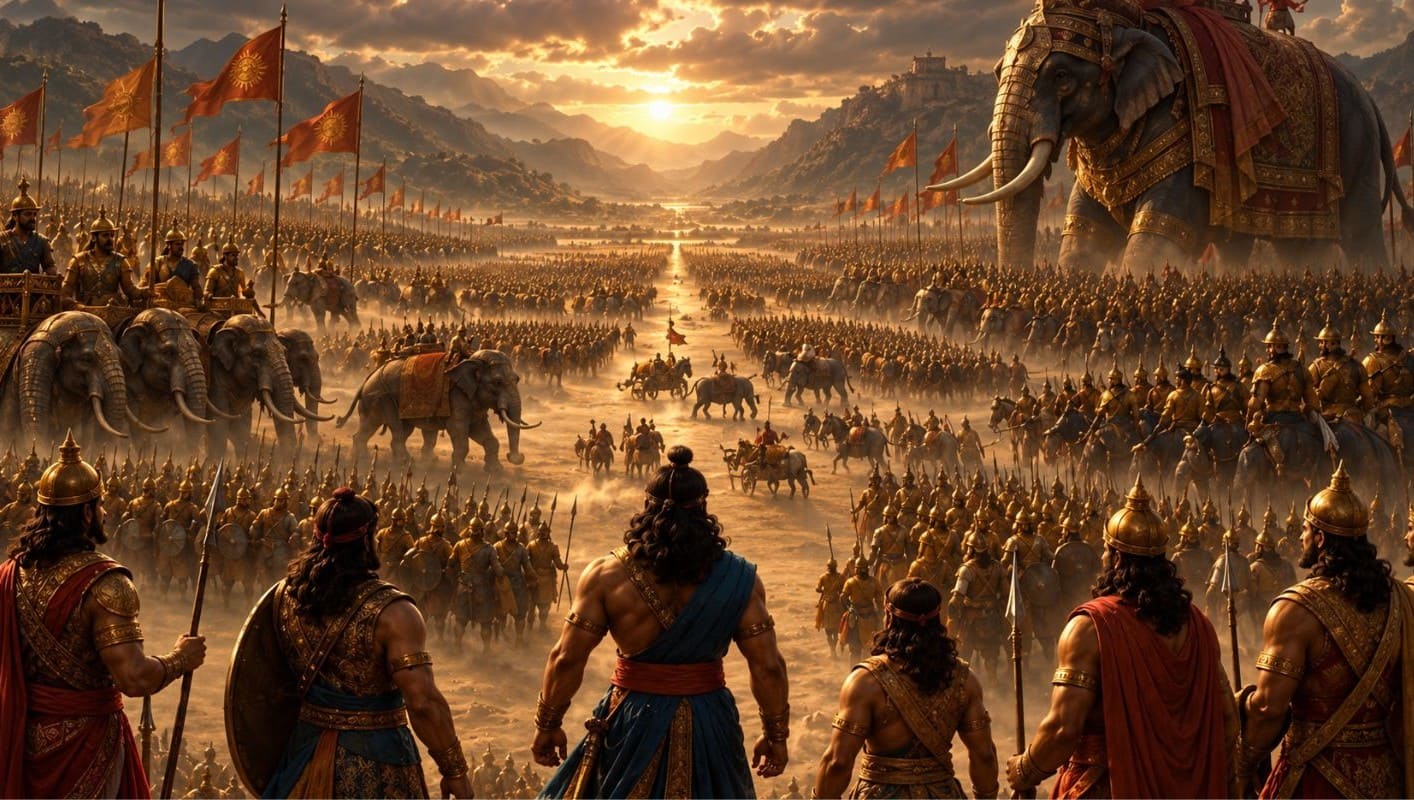
The Yoga of Arjuna’s Despair
ISKCON Title: Observing the Armies on the Battlefield of Kurukṣetra
Divine Form: Shri Parthasarathy – Chennai
The divine form connected with each chapter is my personal devotional interpretation for Verse to Vision. It is not an official classification of the Bhagavad-gītā or ISKCON.
Verse 2
Sanskrit
सञ्जय उवाच
दृष्ट्वा तु पाण्डवानीकं व्यूढं दुर्योधनस्तदा ।
आचार्यमुपसङ्गम्य राजा वचनमब्रवीत् ॥ २ ॥
Transliteration
sañjaya uvāca
dṛṣṭvā tu pāṇḍavānīkaṁ
vyūḍhaṁ duryodhanas tadā
ācāryam upasaṅgamya
rājā vacanam abravīt
English Translation
Sañjaya said:
“O King, Duryodhana saw the Pāṇḍavas’ army arranged for battle. He immediately approached his teacher and began to speak.”
—Śrīla Prabhupāda, Bhagavad-gītā As It Is, 1.2
Wisdom Within the Verse
Sañjaya begins describing the battlefield. When Duryodhana sees the well-organized Pāṇḍava army, he immediately approaches his teacher and commander, Droṇācārya.
Śrīla Prabhupāda explains that Duryodhana appeared confident and diplomatic, but beneath that appearance was fear. The strength and preparation of the Pāṇḍavas made him uneasy.
This verse teaches us that outward confidence does not always reflect inner strength. Sometimes people speak with authority while secretly feeling threatened or insecure.
My Reflection
As an entrepreneur, I have learned that seeing a strong competitor can create fear and self-doubt. But reacting from insecurity can lead to poor decisions. I must study the situation calmly, understand my strengths and respond with clarity—not panic.
As a leader, I must be honest about what I feel. Pretending to be confident while fear controls my decisions can confuse my team. True confidence comes from preparation, awareness and the courage to face reality.
As a philanthropist, I must never see another organization doing good work as a threat. We are not competing for ownership of a cause. If another group is helping people successfully, their strength should inspire collaboration—not jealousy.
This verse asks me:
When I see someone strong, do I feel threatened or inspired?
Do I respond with wisdom or insecurity?
Am I protecting the mission or protecting my position?
A strong leader does not fear the strength of others. A strong leader recognizes it, learns from it and responds with wisdom.