

Sanskrit (Original Shloka):
धृतराष्ट्र उवाच ।
धर्मक्षेत्रे कुरुक्षेत्रे समवेता युयुत्सवः ।
मामकाः पाण्डवाश्चैव किमकुर्वत सञ्जय ॥१॥
dhṛtarāṣṭra uvāca l
dharmakṣetre kurukṣetre samavetā yuyutsavaḥ:l
māmakāḥ pāṇḍavāścaiva kimakurvata sañjaya || 1 ||
Context & Meaning
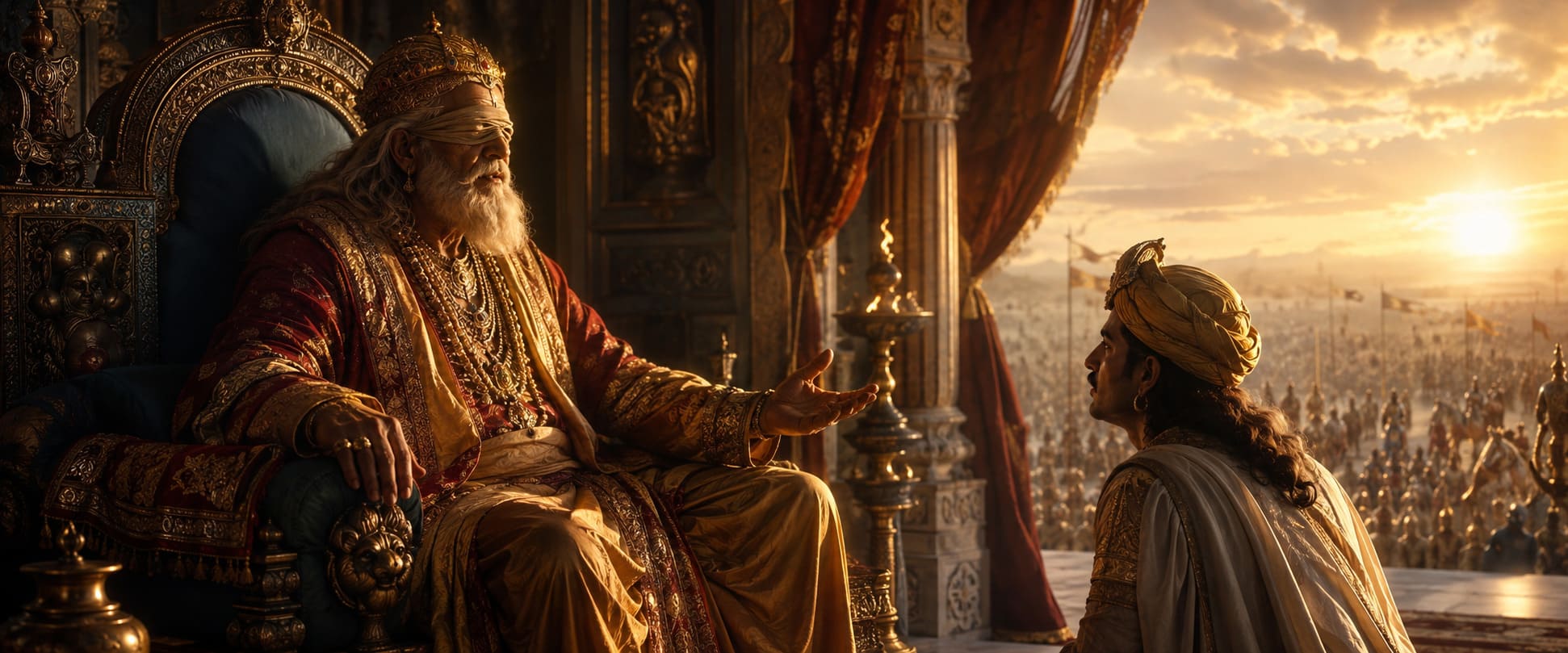
King Dhritarashtra, blind not only in sight but also in judgment, asks Sanjaya about the events on the battlefield of Kurukshetra. He knows the war is about to begin, yet his question reveals anxiety and attachment. Even while calling the battlefield a sacred land of righteousness, he instinctively separates the warriors into “my sons” and “the sons of Pandu.” This opening verse quietly sets the tone of the Gītā—where attachment clouds clarity, and where inner conflict precedes outer war.
Reflection- leadership learning
The Gita begins by teaching leaders that true leadership is a mirror. Before you can manage an external conflict or lead a large team, you must first master your own internal biases, attachments, and blind spots.